Fill in the Blank
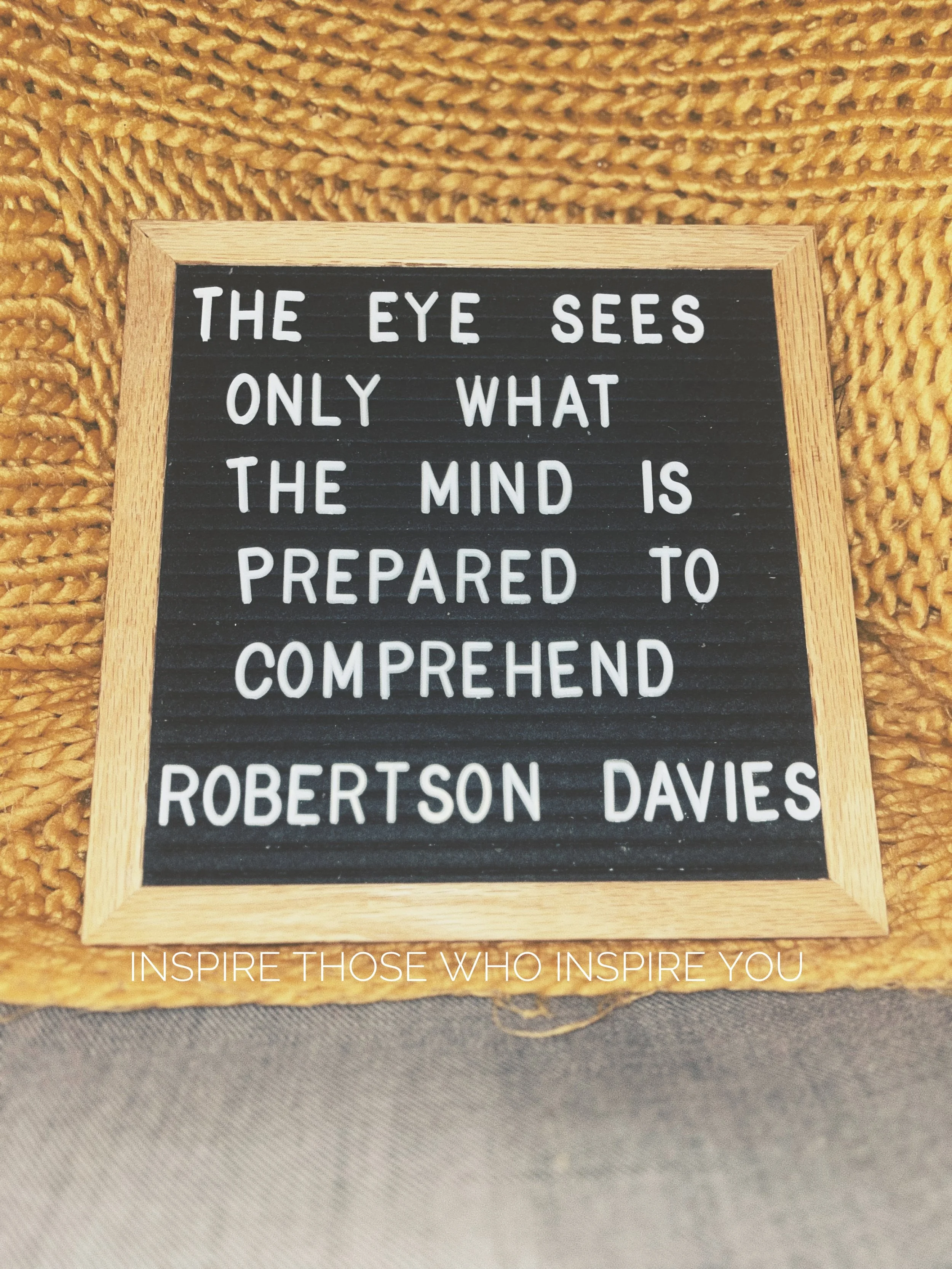
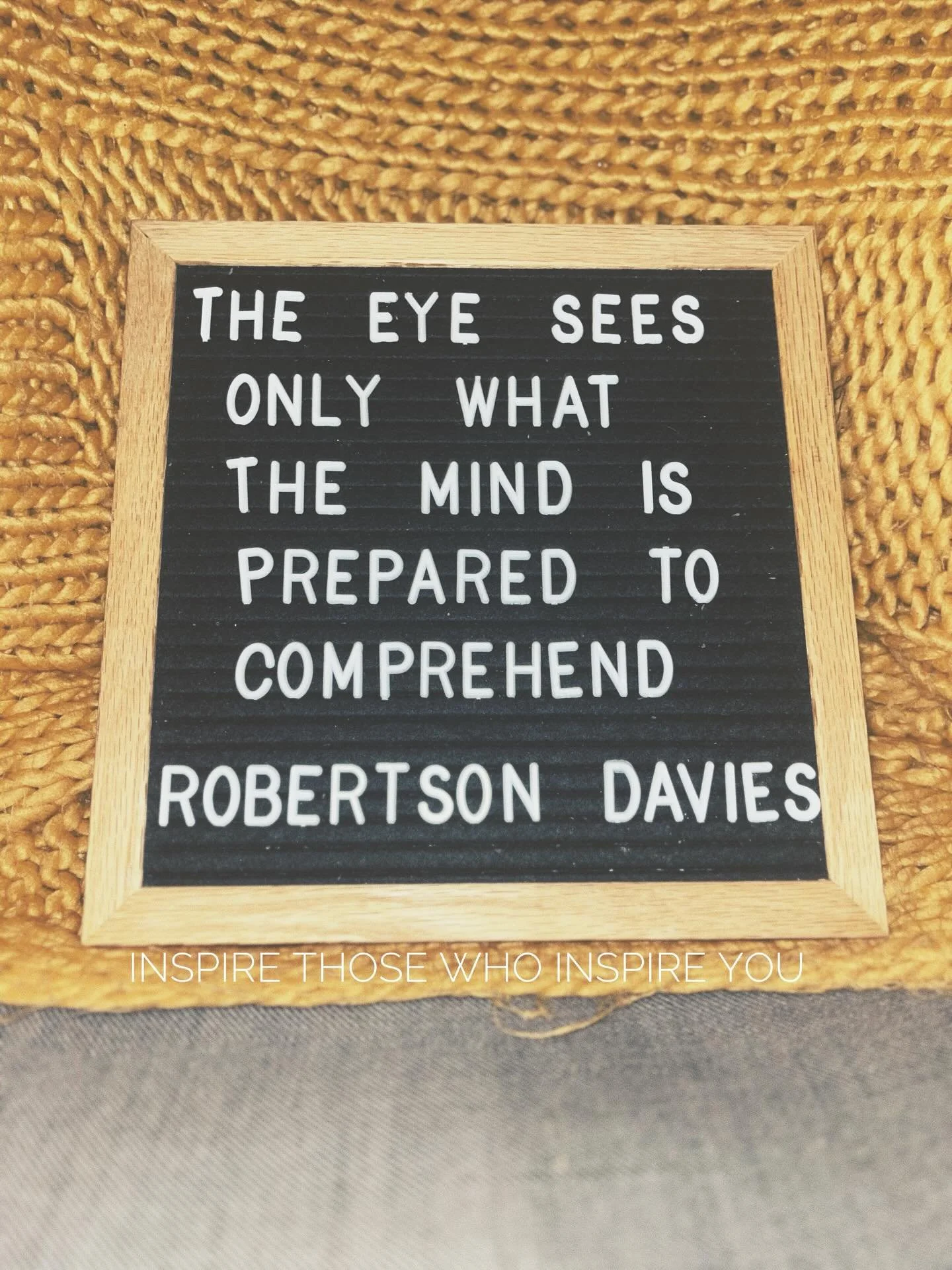
A letter board in front of a dandelion knit blanket with a quote from Robertson Davies that says, “The eye sees only what the mind is prepared to comprehend.”
Editor’s note: This piece reflects where I am right now and what I’ve learned from my own experiences. I share these thoughts as an invitation to reflect on your own life, not as a guide for what you should do with it. Your circumstances, relationships, experiences are your own, and only you can decide what feels right for you.
Welcome curious minds and kind hearts.
Last Month, The Things That Stay series had me thinking about what remains recognizable in us as life changes around us. I spent a lot of time looking inward at who I’ve been, who I am now, and what parts of myself I want to carry forward. It left me with a better understanding of myself, but also with a lot more to think about.
And, as it turns out, understanding myself a little better only gave me more questions about everyone else.
So, For What It’s Worth series is going somewhere slightly different.
This series is about perspective. Mine, yours, theirs, and everything that might exist somewhere in between. What we know. What we think we know. What someone else knows that we don’t. What changes when we finally learn a detail that had been missing all along.
I’m not in search of definite answers. If anything, I’m in search of more. More questions. More understanding. More opportunities to consider another persons’s perspective. Because the more I think about it, the less I’m convinced we ever know anyone’s entire story. And honestly, we probably shouldn’t.
To realistically know absolutely everything about another person, we’d somehow need access to the one place that’s entirely their own: their mind. We’d have to know every thought, every feeling, every memory, every intention, and all the little pieces of context they carry with them that we may never even think to ask about.
And at that point, we’ve moved pretty far beyond “getting to know someone” and into “how exactly do you know all of this?”
So, instead, we’re left with pieces. We know what people tell us. We know what we witness ourselves. We know how they’ve treated us. We notice patterns. We remember previous conversations. We learn things about their history. And from all those pieces, we form an understanding. And there’s nothing inherently wrong with that. We have to make sense of the world somehow.
But there are always blanks.
Think about how easily a story can change with one missing detail. For instance, when a friend tells us about an argument. We listen to what happened, what was said, and how it made them feel. Based on everything we hear, their frustration makes sense.
Then, we learn something else. Maybe there’s history between the two of them that we didn’t know about. Maybe something happened before the argument. Maybe there’s something going on in the other person’s life that our friend didn’t know either.
Suddenly, there’s more to this than we knew.
Ohhhh….
How about when someone doesn’t answer our message? Maybe they’re mad at us. Maybe they’re ignoring us. Maybe they’re busy.
Then we find out something happened that day that had absolutely nothing to do with us.
Ohhhh….
Or when someone reacts strongly to something we consider insignificant, and we think they’re overreacting. Then, months later, they tell us about an experience we never knew they’d had.
Ohhhh, I see.
Sometimes context doesn’t change our opinion at all. We might learn what happened or why someone responded the way they did and still not agree with how they handled it. But there’s often more than meets the eye.
And that’s what interests me.
Their perspective.
Not because I’m looking for it to replace my own, or even change my mind. I’m curious about what they saw that I didn’t. What information they had that I didn't. What experiences they brought into that moment that I could never have accounted for on my own.
And maybe that’s an important distinction. Being curious about another perspective doesn’t require abandoning our own. I can listen to someone’s experience and think I understand why you saw it that way, while still seeing the situation differently myself. I can take what someone tells me seriously without taking it on as my own.
I think that distinction gets lost surprisingly easily.
Someone tells us what another person did, and somewhere along the way, this is what I was told can become this is what happened. And from there, this is what happened can become this is the kind of person they are.
But those are different conclusions.
There’s a difference between saying someone did something rude and deciding they’re a rude person. Some can handle a situation poorly without that moment defining their entire character. And even when someone is being completely honest with us, they’re still telling us what happened from where they stood.
That doesn’t make their experience less important. it just means it becomes one more piece to consider alongside what we already know from our own experience.
Maybe what they tell us lines up with things we’ve noticed ourselves. Maybe it doesn’t. Maybe there’s a pattern. Maybe our history with that person gives us a completely different understanding of them.
One experience doesn’t necessarily cancel the other out. Just as someone saying, “They treated me this way,” doesn’t require me to respond, “Well, they’ve always been nice to me,” as if that disapproves what happened. But their experience doesn’t require me to erase my own either.
Both give me something to consider.
I became especially aware of that during a period in my life when I found myself trying to understand why people I knew were suddenly interacting differently with me m. It even happened in more than one area of my life. First at work, and then, within my close knit group. And although the circumstances were different, I kept running into the same problem.
I knew what I had experienced. I knew what I had said, what I meant, and what I was trying to do. But what I didn’t know was what they had experienced. So I replayed conversations. I went back over things that had happened and wondered what I might have missed. What could I have said differently? What might have been interpreted differently than I intended? What did they know that I didn’t? What did they think had happened?
Sometimes that curiosity came quickly. Other times, admittedly, it came after the frustration. But eventually, I kept arriving at the same place. A place of understanding. I want to understand what this looked like from where they were standing.
And I genuinely believed that if we could talk openly enough, if everyone involved could explain what they experienced, we could have figured out what happened, resolved it, or at least moved past it.
Not necessarily agree. Not necessarily walk away thinking anyone was completely right or completely wrong. Just understand each other better.
The problem was, I couldn’t do that by myself.
I could replay a conversation a hundred times. I could consider every interpretation I could think of. I could explain what I meant and leave room for possibility that something landed differently than I intended. But I couldn’t tell myself what another person was thinking.
Only they could do that.
And when someone you know isn’t communicating openly with you, curiosity can become a frustrating place to be. Because the blank is still there, except now you’re staring at it, trying to figure out what belongs in a space only someone else can fill.
I think that’s what took me the longest to understand. Curiosity can open the door to another perspective. But it can’t make someone walk through it.
When something matters to me, I want to understand it. If there’s been a misunderstanding, I want a chance to clear it up. If someone experiences something differently than I do, I want to know what they saw that I didn’t.
Not because I want to change myself according to every opinion someone has of me. I just think another perspective can give me something worth considering. Maybe there’s something to clarify. Maybe there’s something I could've handled differently. Maybe there’s an opportunity to grow, evolve, or approach something differently in the future. Or maybe, after hearing each other out, we still disagree.
I think, when it matters and the circumstances allow for it, people deserve a chance to have those conversations.
A chance to hear what the issue actually is. A chance to explain what they experienced. A chance to ask questions, clarify, take accountability where it belongs, grow where there’s something to learn, or simply see how two people walked away from the same situation with different understandings of it.
When I couldn’t get that clarity, though, I kept looking for an explanation. And often, I looked at myself first. I questioned what I might have done or how something could have been understood differently, even when I couldn’t quite put into words what I thought had gone wrong.
Since the relationships and situations mattered to me, not knowing was difficult to leave alone. But there’s a limit to what we can figure out from our own side of a conversation.
Someone doesn’t have to give us every thought or feeling they have. Communication can be as simple as, “I need some time.” Or “I’m not ready to talk about this.” Even “I see this differently, and I don’t want to keep discussing it” gives the other person something real to understand.
Silence is different.
It might mean someone isn’t ready or have a conversation right now. But without communication, I don’t actually know that. And if the other person ultimately doesn’t participate in working through whatever happened, there isn’t much of a conversation left to be had.
The issue may still be unresolved. The questions may still be there. One person may still be left confused and without answers.
What silence can’t tell me is why. And that’s an awfully tempting blank to want to fill in.
But eventually, there comes a point where we’ve reached the edge of the information we’ve been given. And so, while I might think a conversation could still change things, I can also recognize when I’ve done what I can with the information and participation available to me.
For instance, I can invite someone into a conversation. I can leave room for their perspective. I can be willing to hear something I may not agree with. But I can’t create mutual understanding alone.
Knowing that doesn’t make me stop wondering, no matter how much I wish it could. I wish I knew what some of those conversations sounded like from the other side. What someone thought I meant. What they saw that I didn’t. What information they were working with that I never had.
Yet as I continue to move forward, it hasn’t made me any less curious about any of that. If anything, the experience has made me think more carefully about how easily we can get one another wrong.
We can hear part of a story and think we know the rest. We can experience someone’s behavior and form an understanding of why they did it. We can repeat something we were told until it starts to feel like something we witnessed ourselves.
Sometimes our understanding may be right. But I think it’s worth leaving room for the possibility that it isn’t.
Not so we question every interaction or refuse to trust our own judgement, but so we leave a little room for curiosity. Enough to ask. Enough to listen. Enough to clarify when something matters, and to recognize the difference between what we experienced, what we were told, and what we’ve concluded from either one.
Because misunderstandings happen. People remember things differently. Intentions don’t always translate the way we expect them to. History changes how we interpret things. And sometimes two people can be looking at the same situation with information the other person simply doesn’t have.
That doesn’t mean every disagreement can be resolved. It doesn’t mean another perspective will change our mind. And it doesn’t mean we have to keep reaching for a conversation the other person isn’t participating in.
But maybe we can be a little less certain about the things we never clarified. A little more careful about turning one experience into someone’s entire character. A little more aware of just how possible it is to get another person wrong, especially when we never asked them what they saw.
For what it’s worth, I think curiosity, communication, and a willingness to understand can make all the difference. They may not fill every blank. But they can make us a little bit more careful about what we put there ourselves.
As a signature of my blog, I’d like to end this post with a suggestion to “Pass on kindness.” There’s no time like the present to Inspire Those Who Inspire You. Acts of kindness, no matter how big or small, can have a direct, positive impact on someone else. Go out there today and change someone’s life for the better!
***These are my personal opinions and may not be those of my employer.***