Real Over Right
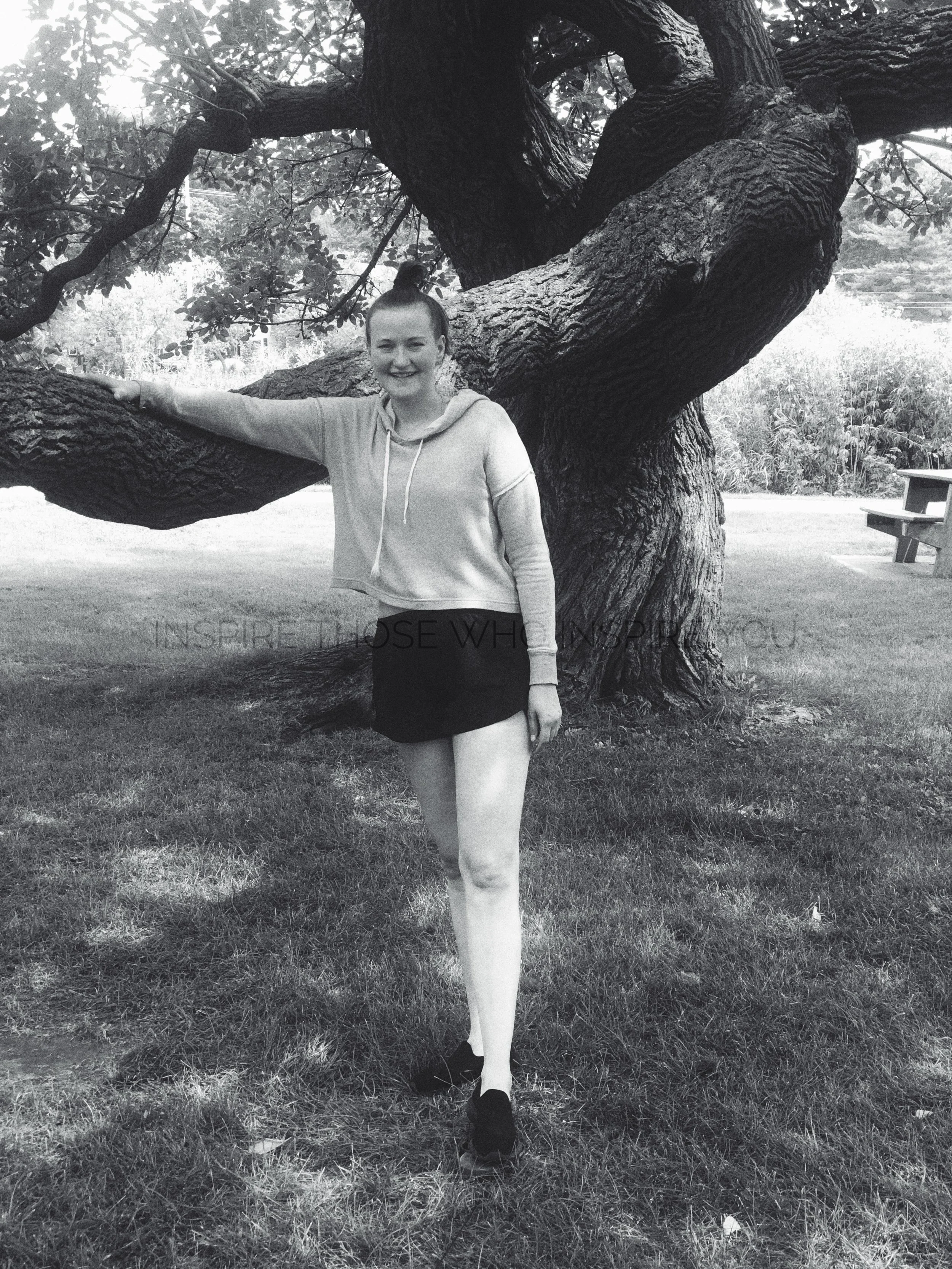
Leaning against a favorite tree with my arm resting on its truck, I stand grounded and unguarded. The steady presence of the tree reflects the heart of “Real Over Right” by choosing authenticity and rooted honesty over the need to prove a point.
Editor’s note: Written from my current vantage point.
Welcome to the ones asking harder questions and choosing softer truths. You’re in good company. Around here, we’re learning to live more honestly, not just in what we say, but in how we meet ourselves. This space is rooted in courage. The kind that lets us name our experiences and grow from them. Head & Heartwork is a new series dedicated to that process of bringing our thoughts and emotions into conversation, and exploring wha alignment looks like from the inside out. In this first post, we’re focusing on mental and emotional honesty. Not the kind that demands certainty, but the kind that invites curiosity. It’s about noticing what’s true for us, even when it’s uncomfortable and allowing that awareness to shape how we move forward. Together.
So, if you’re ready, or even just curious, go lean in a little closer, let’s begin. Today, we’re exploring the tension between toxic positivity and grounded optimism: two very different ways of relating to discomfort, challenge, and growth.
Toxic positivity is the pressure to stay upbeat no matter what, to override pain, doubt, discomfort with forced cheerfulness. It often sounds like “just stay positive” or “good vibes only,” and while it may be well meaning, it can shut down emotional honesty and create shame around different feelings.
Grounded optimism, on the other hand, makes space for the full range of emotion. It doesn’t deny struggle, it honors it, while still holding belief in the possibility of growth, healing, or meaning in the other side, it says this is hard and I can still move through it. It’s rooted, real, and resilient.
There was a time in my life when I was juggling a lot, both personally and professionally. I was showing up, staying present, and doing my best to hold everything together. During that season, a comm et was made that made me pause and reflect. It raised the question: Was I being overly positive to avoid what I was really feeling?
And that question stayed with me. I began to look inward, not out of guilt, but out of curiosity. Was I ignoring my own experience or was I simply choosing to move through it with hope? Over time, I came to understand that I wasn’t bypassing my emotions? I was managing them. I felt everything deeply. But I also believed in the possibility of things getting better, and that belief wasn’t false, it was foundational.
The experience became a turning point in how I understood emotional resilience. Because toxic positivity denies, it dismisses discomfort and avoids depth. But grounded optimism accepts. It acknowledges the weight of reality while still holding space for light. And that, I’ve learned, is where true growth begins.
Reflective Prompt #1 — Can you recall a time when you were holding things together and someone misunderstood your way of coping or showing up? What did you learn about yourself in that moment? His do you now distinguish between avoiding discomfort and moving through it with grounded hope?
It’s not always when those moments start to shape us. Sometimes, it’s not a breakdown but a quiet shift. You’re finding it together, you’re doing your best, and then something is said or implied that makes you question whether your way of coping is acceptable. Whether you’re emotional truth is too much.
I remember a time when I was overwhelmed, exhausted, stretched thin, and holding back tears that eventually found their way through. I didn’t break down. I simply had a moment. And shortly after, I was told I was being too sensitive. No concern, no curiosity, just a quiet judgement that stuck.
That experience led me to think more about how emotional honesty is received. The deeper with wasn’t just recovering from what was said to me. It was learning to stay rooted in my own experience, even when others didn’t understand it. Grounded optimism became part of that healing. Not feeling like I had to be okay, but trusting that I could feel what I needed to feel in order to still believe things would get better. That’s where toxic positivity can’t compete. It’s not about pretending pain doesn’t exist, it’s about knowing that pain and hope can coexist, and allowing both to shape who we become.
Reflective Prompt#2 — When you thing about the hope you carry, especially in hard seasons, what is it rooted in? Is it based on past experiences, your core values, faith, or something else entirely? Or does it feel like hope you’re supposed to have, even when it doesn’t feel honest? Take a moment to explore whether it’s grounded optimism of us if just something we’ve been taught to do?
However, when optimism isn’t grounded, it can become something we do instead of something we trust. And when that performance slips, when we’re not able to “stay positive” or “hold it all together, it can quickly turn to shame.” That’s the third and final distinction, toxic positivity shames, while grounded optimism supports.
Toxic positivity often shows up as a subtle “should.” You should be over this by now. You should be grateful. You should look on the bright side. These messages may not always be said outright, but they’re felt, and they can make us question our emotional responses or make us feel like we’re falling simply for feeling.
Grounded optimism, by contrast, leaves room, it doesn’t rush you through your process of shame you for struggling, it reminds you that it’s possible to feel overwhelmed and still believe in what’s ahead. It supports, not by fixing or forcing, but by staying present. It offers the mind of stressful reassurance we often need most of you’re allowed to feel this and you’re not alone in it.
Reflection Prompts #3 — After sitting with this idea, ask yourself: Do I feel more connected to this thought, or disconnected? What does that response reveal about where I am right now?
Grounded optimism asks more of us than surface level positivity. It asks for emotional honesty. It’s not about being positive of negative, per se. It’s about being real. It’s the quiet mature tone of holding hope and truth in the same hand, without denying either.
This is what heart work looks like in practice. The world doesn’t need more forced smiles if empty affirmations. It needs honest hope. The kind that can sit with pain, stay present through uncertainty and still believe in what’s possible.
If this resonates, I’d love to hear what this brought up for you. What does grounded optimism look like in your own life? Feel free to message me on socials if reflect privately, either way, you’re doing the work.
Thank you for joining me for today’s journey. The next post in this series will be out next Monday, January 9th. Until then, take time to reflect on your own personal history, such as: what you’ve carried, how you’ve coped, I and what hope has meant to you along the way.
As a signature of my blog, I’d like to end this post with a suggestion to “Pass on kindness.” There’s no time like the present to Inspire Those Who Inspire You. Acts of kindness, no matter how big or small, can have a direct, positive impact on someone else. Go out there today and change someone’s life for the better!
***These are my personal opinions and may not be those of my employer.***