Unintended Reflections
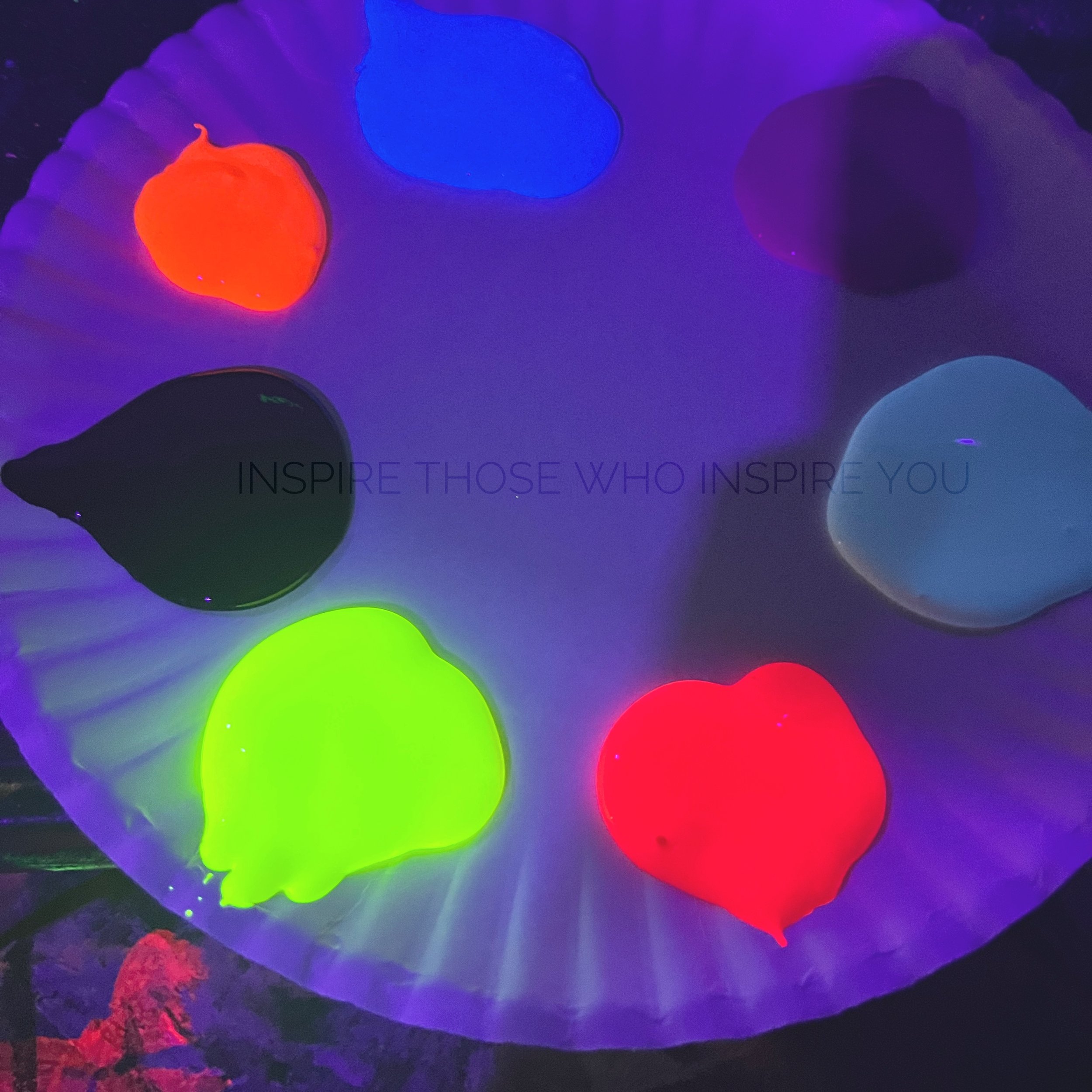
Glow-in-the-dark paint spread around in neon colors, glowing brightly n the dark and reflecting the idea hat creativity can reveal hidden thoughts and emotions.
Editor’s note: Written from my current vantage point.
Welcome back, inquisitive minds and creative visionaries, to another chapter of Creative Control. A series about reclaiming authorship over our lives by learning when to hold on, when to let go, and how to create from truth instead of fear.
Within the first post of this series, “Making Without Measuring,” I reflected on how creativity can slowly become tied to results and expectations, and what changed when I stepped away from constantly measuring the outcome.
What I didn’t expect was how much the work itself would begin to reveal.
When we create, we often put emphasis on the process or the final result. But over time, certain patterns start to appear. Themes repeat, ideas return, and sometimes the work begins reflecting thoughts or perspectives we weren’t consciously trying to express.
And before we know it, our work, my work becomes a mirror.
A few years ago, during a time when I needed extra support, the idea of art therapy came up. Since art has always been a part of my life in one way or another, I decided to give it a try.
Growing up, art had mostly been a hobby. But after a few sessions, I started to notice how enjoyable it was. Being able to create anything, to let emotions, perspectives, and experimentation take over, was surprisingly calming.
Eventually I made it a habit to return to creative activities. I started small by coloring, crafting, and drawing. Before long, I found myself painting again, something I hadn’t done since I was a child. It began with five small 4x4 paintings and slowly but surely turned into a weekly passion.
Now it’s hard to imagine my life without creating.
What I didn’t realize at the time was how much my work would start reflecting what I was going through. While I was navigating some more intense things in my life, I began noticing patterns in my art, ways of expressing thoughts and emotions that I couldn’t always articulate in everyday life.
Over time, I began to realize that creativity can reveal more than just what we choose to express. Sometimes it also reveals what we avoid expressing.
There were moments when I noticed myself hesitating before starting certain ideas, or quietly moving away from subjects that felt a little too close to what I was experiencing at the time. I didn’t always recognize it in the moment, but looking back, those moments of hesitation were just as revealing as the work I did create.
For example, there was a period when someone close to me believed I was struggling in ways that I didn’t fully relate to. Their perspective gave from a place of concern, but it didn’t quite reflect where I actually was mentally and emotionally. Because of that, I found myself avoiding more personal or sensitive themes in my work.
Looking back now, moments like that have shown me something else about creativity. Over time, the things we create begin to form a quiet record of where we were in life when we made them.
When I first returned to creating, opening up creatively didn’t always come easy. I often held back, unsure of how much of myself I wanted to include. There was a bit of a hesitation there, even if I didn’t fully recognize it at the time.
But now, that has changed. The more I continued creating, the more natural it began to feel. What once felt difficult to open up through creativity now feels much easier. Instead of holding back, I’ve learned to let the process unfold and trust whatever emerges in my work.
Looking back at earlier pieces now, I can see those differences clearly. They reflect where I was at the time, just as the work I create today reflects where I am now.
What I’ve learned is that those reflections become much clearer when the pressure to create a certain way disappears.
When creativity is tied to outcomes or expectations, it’s easy to focus only on the result. But when that pressure fades, the process becomes more honest. The work starts to reflect curiosity, perspective, and emotion more naturally, often revealing things we didn’t intend to express.
In many ways, that’s what creativity has become for me. Not just a way to make something, but a way to notice things about myself that I might not have recognized otherwise.
Sometimes those reflections appear in what we create. Other times they appear in what we hesitate to create. And occasionally, they only become clear when we look back later.
And if there’s one thing experience has taught me, it’s that creativity doesn’t need to be controlled or perfected to be meaningful. Sometimes simply allowing yourself to create is enough to learn something about where you are, and where you might be going next.
Either way, the process has shown me that creativity doesn’t just produce something new, it can also quietly reveal something about the person creating it.
Join me again on Monday (March 16th) as the Creative Control series continues with its next post, “Messy Without Permission,” where we’ll explore what happens when creativity doesn’t ask for approval before it unfolds.
As a signature of my blog, I’d like to end this post with a suggestion to “Pass on kindness.” There’s no time like the present to Inspire Those Who Inspire You. Acts of kindness, no matter how big or small, can have a direct, positive impact on someone else. Go out there today and change someone’s life for the better!
***These are my personal opinions and may not be those of my employer.***