Facing Resistance
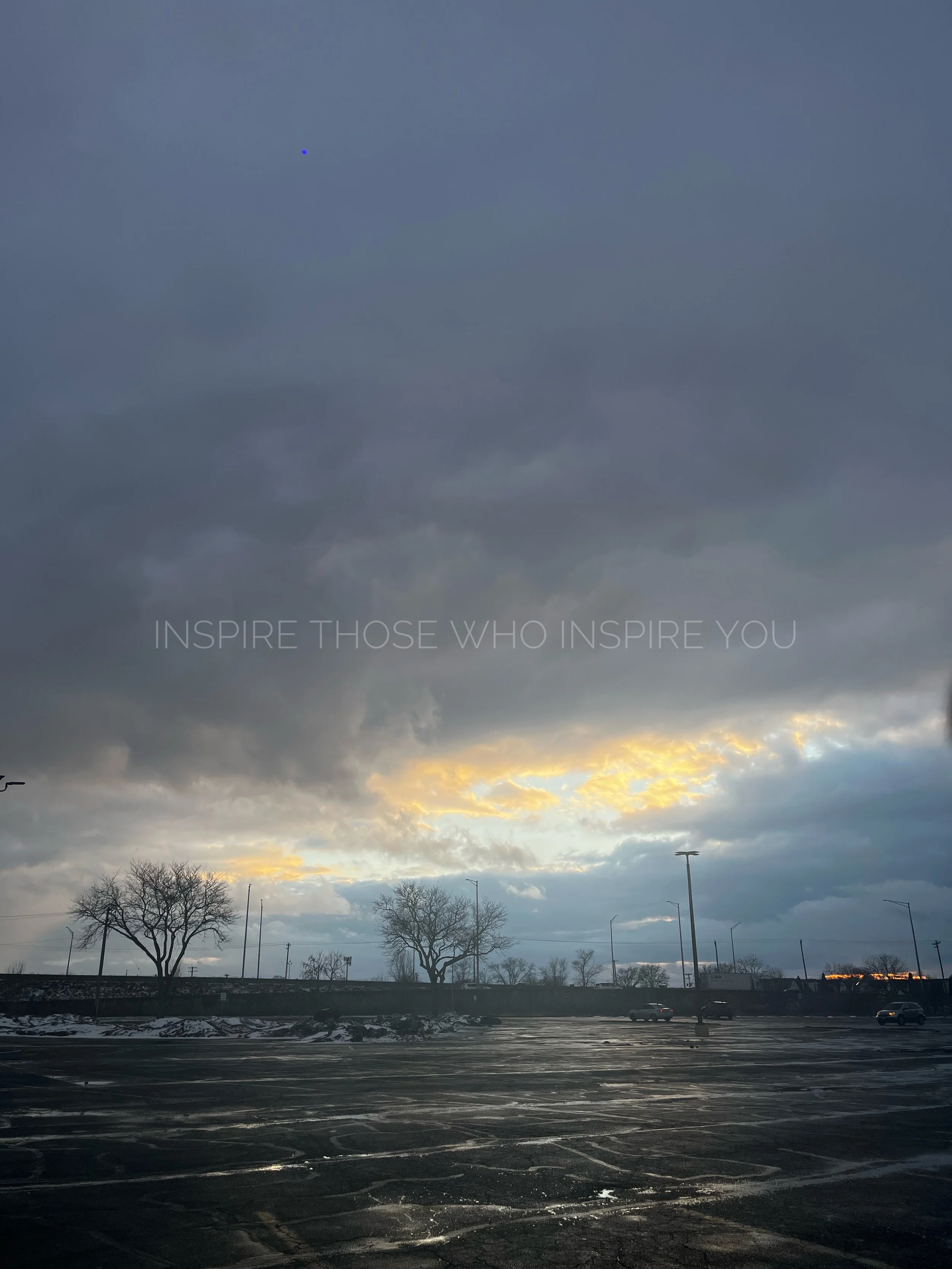
A cloudy sky filled with mostly heavy gray clouds, symbolizing moments of resistance, uncertainty, and pushing through difficult hurdles
Editor’s note: Written from my current vantage point.
Welcome back, innovators, pioneers, and visionaries, to the latest entry in the Creative Control series, where we discuss reclaiming authorship over our lives by learning when to hold on, when to let go, and how to create from truth instead of fear. Before we get started with today’s post, here is a brief review of the posts we’ve covered so far in the Creative Control series:
Making Without Measuring — In this post, I explored what happens when creativity is no longer tied to results or expectations, and how letting go of constant evaluation can bring back a sense of exploration.
Unintended Reflections — Within this post, I reflected on how creative work can quietly review our thoughts, emotions, and experiences, often in ways we don’t immediately recognize.
Messy Without Permission - Here, I explored the importance of allowing creativity to be imperfect, and where growth often begins when we stop waiting for everything to feel right before we start.
But even as creativity began to feel more open and intentional, there were still moments that felt unexpectedly difficult, even when I thought I had moved past them. Resistance has a way of showing up quietly. This can be through overthinking, comparison, or even the feeling that what we create isn’t enough. That alone can make starting feel much harder and finishing more uncertain.
However, what I’ve come to learn is that resistance isn’t necessarily a sign to stop. In many ways, it’s part of the process. In this post, I reflect on how recognizing, reframing, and responding to resistance has helped me move through those moments of self-doubt and how to avoid getting stuck.
Now if you’ve ever been like me and faced resistance, it’s easy to assume something is wrong. It often shows up when we’re trying something new, when we’re being vulnerable, or when what we’re doing feels meaningful. Except experiencing resistance isn’t a sign of failure. In many cases, it’s a sign that you’re heading in the right direction.
I’ve noticed this in my own experiences. Whenever I start something new, I tend to feel hesitant and overly cautious. Sometimes I even stop myself before I’ve even really given it a chance. Yet once I move past that initial resistance, I’m more determined than ever, and that sense of pushback begins to fade.
Part of what makes resistance so difficult is that it isn’t always easy to recognize in the moment. It doesn’t look like something obvious. Sometimes it shows up as procrastination, comparison, overthinking, or waiting for the right time. Other times, it can feel like doubt, fear, or even embarrassment. In other words, what feels like a lack of motivation is often resistance in disguise.
Now one of the ways that resistance often shows up for me, is through fear. Most notably, the fear of not being good enough. A big part of that fear often comes from comparison. One of the most common forms of resistance stems from comparing ourselves to others. It can stop us in our tracks, make us question everything we thought we knew, and leave us feeling worse about ourselves. This is because comparison shifts our focus away from creating and instead focuses our attention on evaluating. This pattern not only reinforces our hesitation and our doubt but also our fears.
So, if you’ve ever found yourself comparing your artwork or your path to someone else’s, you’re not alone. I personally think it’s a natural, human response, even if it isn’t particularly helpful. Just because you may feel stuck doesn’t mean you are stuck.
Over time, you can learn to notice the patterns, to shift your focus, and to keep moving forward anyway. Like anything else, it takes practice to recognize, reframe, and respond to our thoughts or behaviors in a different way. It’s not one of those things that typically happens over night. It’s something you have to continue to work on time and time again. And as time passes by, it’ll get easier and easier.
But even when comparison starts to fade, another form of resistance can often take its place. And that’s perfectionism. More often than not, it’s the idea that our work needs to be “great” or “perfect” before it’s worth sharing. And that alone can stop us from beginning, or from finishing something that matters to us.
If you continue on despite of that need. Then what? If you guessed growth, you’re correct. Growth doesn’t come from getting it right all the time. It comes from allowing ourselves to create, to practice, and to show up consistently regardless of those feelings.
I know because it’s something I’ve experienced in my own life. There was a period where I resisted starting altogether. But once I took that initial step, I began to realize that the fear, the doubt, or the reluctancy was something I had control of. And the more I put in the work to overcome it, the more determined I was to continue it.
That experience alone taught me something important. You don’t need to feel ready to begin.
Waiting until we feel confident or inspired often leads to inaction. Why? Because it’s one way we give ourself an out, an excuse, in order to procrastinate. Yet in reality, clarity usually comes after we’ve already taken action, not before it.
Think about it this way. After a long day, you might decide to go for a walk. And it’s not until you actually take that step, start moving, and give yourself that space that things begin to make sense. You gain clarity, reflect, and think, “okay, now I understand,” or “I could’ve approached that differently.”
That clarify didn’t come before the walk, it came because of it. Each time you create, bake, pray, or decide to workout despite the doubt or hesitation, you’re proving to yourself that you can follow through. And through that, confidence begins to grow.
Now confidence isn’t something to wait for, it’s something you build by showing up. And one of the easiest ways to start showing up is by taking small, manageable steps. If you need to, start with a tiny sip, a cupcake sheet, or a blank easel.. It doesn’t have to be perfect or significant, it just has to be something.
Previously, Ive discussed the importance of taking things one step at a time. For instance, if you’re trying to drink more water or cut back on coffee, it’s easy to focus on how far you have to go. But instead, practice focusing on whether you’ve improved, even if it’s just a little. A single extra sip is still progress, and in my opinion, that’s something worth celebrating.
Then, remind yourself that change isn’t easy. There’s a reason people say we’re creatures of habit. This often occurs because once we’re comfortable and content, it can be difficult to deviate from our routines or habits that are already in place. .
Something I often have to remind myself is if you take a step back, that’s okay too. Progress isn’t always linear. You’re human, and mistakes are part of the process. It’s not something to criticize yourself for, but it is something to move through with patience.
Over time, you start to realize that resistance isn’t something you need to get rid of, it’s something you can move through.
While it may never fully go away, you do get better at navigating it. The difference isn’t whether resistance shows up, but how you respond when it does. The key takeaway here isn’t to eliminate it, it’s to understand it, and continue moving forward anyway.
If you’ve been feeling resistance in your own creative process or in any area of growth, consider this your reminder to start where you are. Take one small step, and allow that to be enough.
Join me again next Monday as the Creative Control series continues. Until then, sending you love and light on your journey.
As a signature of my blog, I’d like to end this post with a suggestion to “Pass on kindness.” There’s no time like the present to Inspire Those Who Inspire You. Acts of kindness, no matter how big or small, can have a direct, positive impact on someone else. Go out there today and change someone’s life for the better!
***These are my personal opinions and may not be those of my employer.***