Beneath the Surface
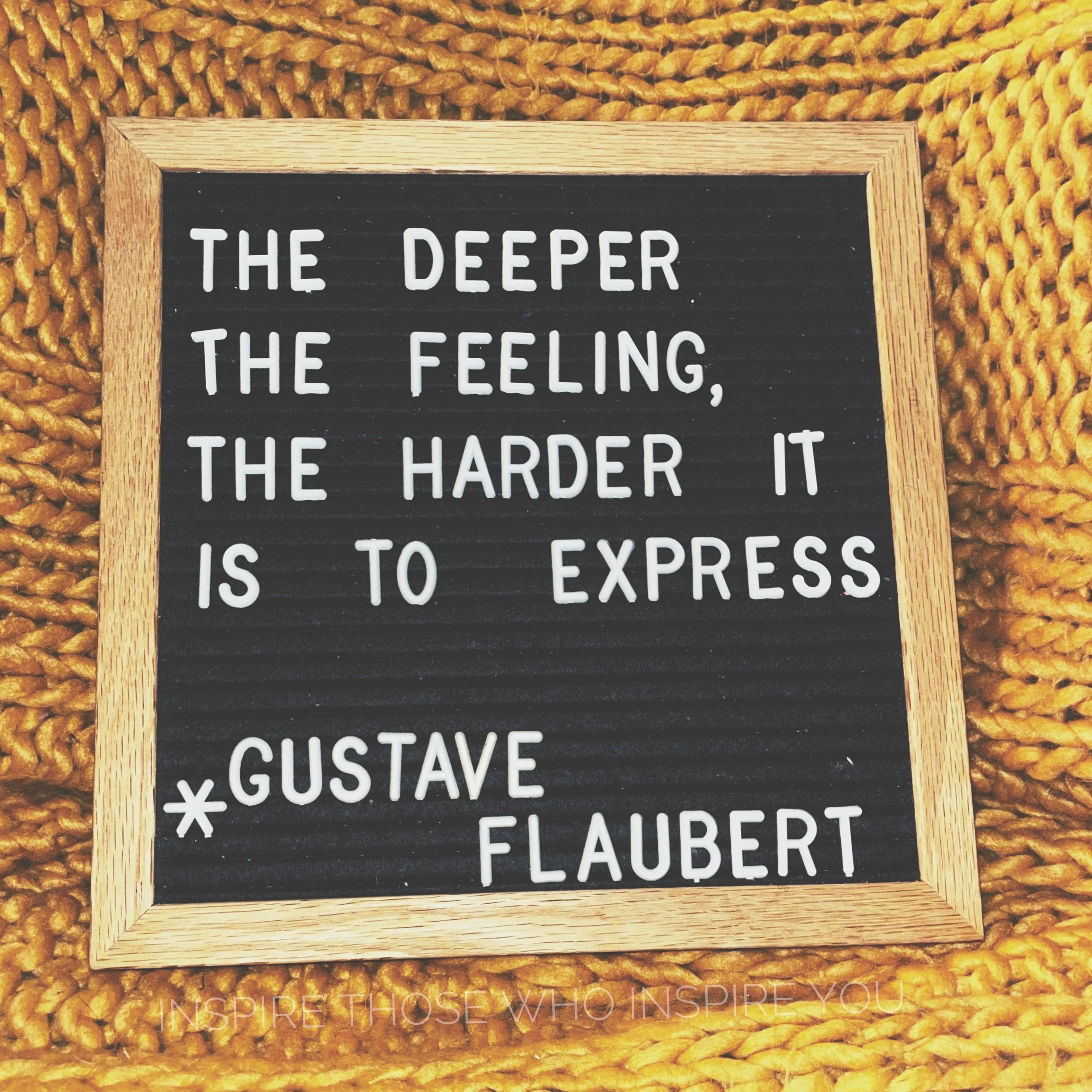
In front of a dandelion-kit blanket is a letter board with a quote from Gustave Flaubert on it saying, “The deeper the feeling, the harder it is to express”
Editor’s note: Written from my current vantage point.
Welcome back, soft hearts and kind souls, to this space of reflection and to the next chapter of the Head & Heartwork series. A series centered on aligning what we think with what we feel. It explores the balance between logic and emotion, growth and honesty, self-awareness and self-compassion. The focus isn’t on perfection or performance, it’s on doing the internal work that helps us live more grounded, intentional, and authentic lives. But before we continue any further, let’s stop and reflect on the previous posts of this series so far:
“Real Over Right” - Choosing honesty over ego. This post explores what it means to value authenticity more than winning, proving, or being correct
“All the Feels” - Letting yourself feel the full range. Growth doesn’t come from avoiding discomfort, it comes from allowing every emotion to have a place
“Low-Key Grateful” - Finding meaning in the ordinary. A reminder that gratitude doesn’t have to be loud to be real. It often lives in the small, everyday moments
This year began with our focus on strengthening our foundation by slowing down, reflecting on the past year, and getting honest about who we actually wanted to become. Not who sounds good on paper. Not who feels impressive. But with who feels aligned.
February was about building on that. About mental and emotional honesty. About noticing what’s true instead of what’s comfortable… and choosing to sit with it instead of rushing past it.
So here we are. Today’s post, and a bonus one coming this Wednesday, are both part of that continued deepening. With more layers before we shift.
Because in March, we step into a whole new focus of creativity and control. How we express what’s been surfacing. Where we’re gripping to tightly. And what it looks like to create from a grounded place instead of a guarded one.
That brings us to today’s post, where we’ll be talking about the emotions that don’t always make it to the surface. The quiet ones. The hidden ones. The ones we’ve learned to manage instead of understand.
By naming them, they start to reveal something. About our patterns. Our fears. Our needs. Even our growth.
So today, we’re not fixing. We’re noticing. And seeing what’s been there all along.
Earlier this month, I briefly mentioned how most of us have “off-limit” emotions. The ones were taught are wrong, weak, dramatic, or unsafe to show.
And often, it’s not even the emotion itself that feels dangerous. It’s the story attached to it. The meaning we learned to give it.
For example: If I express my emotions genuinely and wholeheartedly, I’m being too sensitive.
That belief doesn’t come out of nowhere. Sometimes it’s shaped by real experiences like being open, vulnerable, and sincere.. only to have that openness used again you. Being put down. Being blamed. Being told your honesty was the problem.
Over time, the feeling isn’t what we shut down. It’s the risk.
This tends to happen most often with emotions we label as negative, such as, anger, jealousy, sadness, fear. Those are usually the first to get pushed down or judged.
But it doesn’t stop there. Even joy, excitement, pride, or hope can become emotions we hide. Sometimes we were taught not to be “too much.” Not to celebrate too loudly. Not to outshine. Not to expect too much in case it gets taken away. So it’s not just the heavy emotions we limit. It’s any feeling that once felt unsafe to fully express.
While there can be a lot of reasons we resist certain feelings, it doesn’t automatically mean they’re a threat.
More often than not, that instinct to pull away, deflect, minimize, or ignore has less to do with the emotion being “bad” and more to do with it being unprocessed. It’s unfinished. It hasn’t been fully felt or understood yet.
Think of it like how the body keeps score. What we don’t acknowledge doesn’t disappear, it stores. And lately, more and more people have been talking about this very thing: buried emotions don’t stay buried forever. They resurface. In patterns. In reactions. In tension. In ways we don’t always connect back to the original moment.
It’s usually not a matter of if. It’s a matter of when.
There was a season in my life that felt especially cruel. I had no real support. I was dealing with a health scare. I was carrying more responsibility than I ever had before in my personal life.
It wasn’t that I was consciously avoiding my emotions. I just didn’t have the capacity to process them, at that time. I didn’t have the energy to sit, release, or untangle what I was feeling. Survival took priority.
So I kept moving. Not because I was healed. Not because I wasn’t hurting. But because people depended on me, and stopping didn’t feel like an option.
I’ll share what I eventually learned from that season of my life in Wednesday’s post.
What I didn’t realize at the time was that keeping busy wasn’t strength, it was avoidance. When we don’t fully feel something, we don’t eliminate it. We postpone it. And postpone emotions don’t disappear, they deepen.
The more we avoid what hurts, the more it settles beneath the surface through shaping our reactions, our relationships, even how we see ourselves. Suppressed feelings don’t stay quiet. They show up as disconnection, burnout, irritability, or a constant emotional tension we can’t quite name.
Denial may feel protective in the moment, but over time it limits our growth. It creates distance, not only from others, but from ourselves.
Feeling something isn’t the same as growing from it. Growth happens when we can stay with an emotion long enough to understand it, without letting it consume us. But staying doesn’t mean spiraling, it means:
Naming what’s there without judging it.
Returning to the body by noticing breath, tension, sensation.
Getting curious instead of critical.
Hidden emotions aren’t flaws. They’re signals. Anger can reveal a boundary that was crossed, but many times, it’s also protecting something more vulnerable underneath. Grief shows us what we loved. Shame can signal beliefs we’re ready to unlearn.
Emotions are layered. While anger is often the armor, it’s most often protecting us from hurt.
Every emotion carries information. The goal isn’t to silence them or dramatize it, it’s to listen. When we stop treating feelings as problems to fix, and start seeing them as messages to decode, we reconnect with ourselves in a deeper way.
And maybe that’s where growth begins, not in fixing, but in listening.
If you’re open to it, take a moment:
What feeling have you been avoiding lately, and what might it be trying to tell you?
Share if you’d like below or just name it to yourself. Either way, that’s the work. Until next time, I wish you the very best, love and light.
The bonus post for this month will be out Wednesday, February 25th.
As a signature of my blog, I’d like to end this post with a suggestion to “Pass on kindness.” There’s no time like the present to Inspire Those Who Inspire You. Acts of kindness, no matter how big or small, can have a direct, positive impact on someone else. Go out there today and change someone’s life for the better!
***These are my personal opinions and may not be those of my employer.***