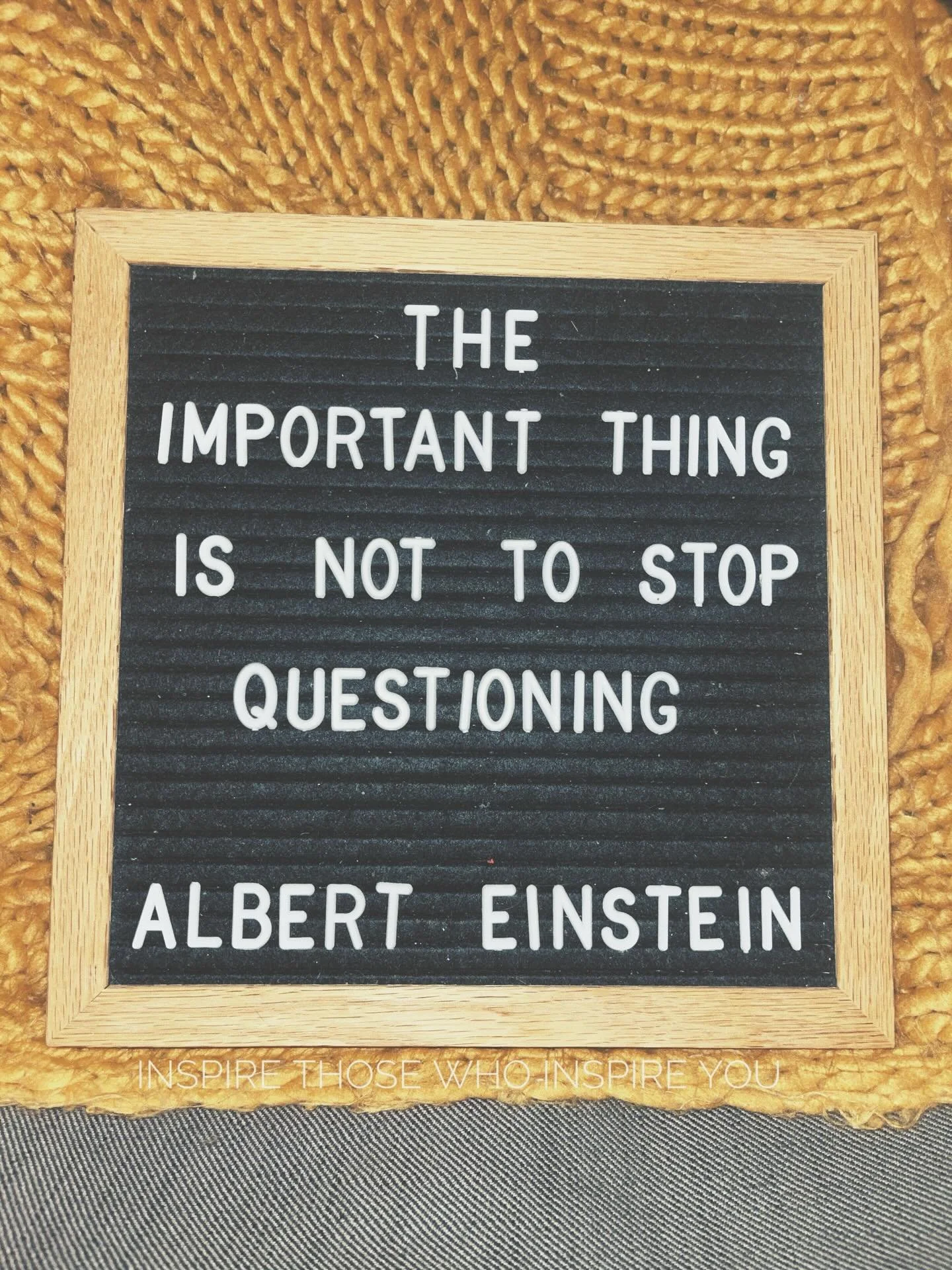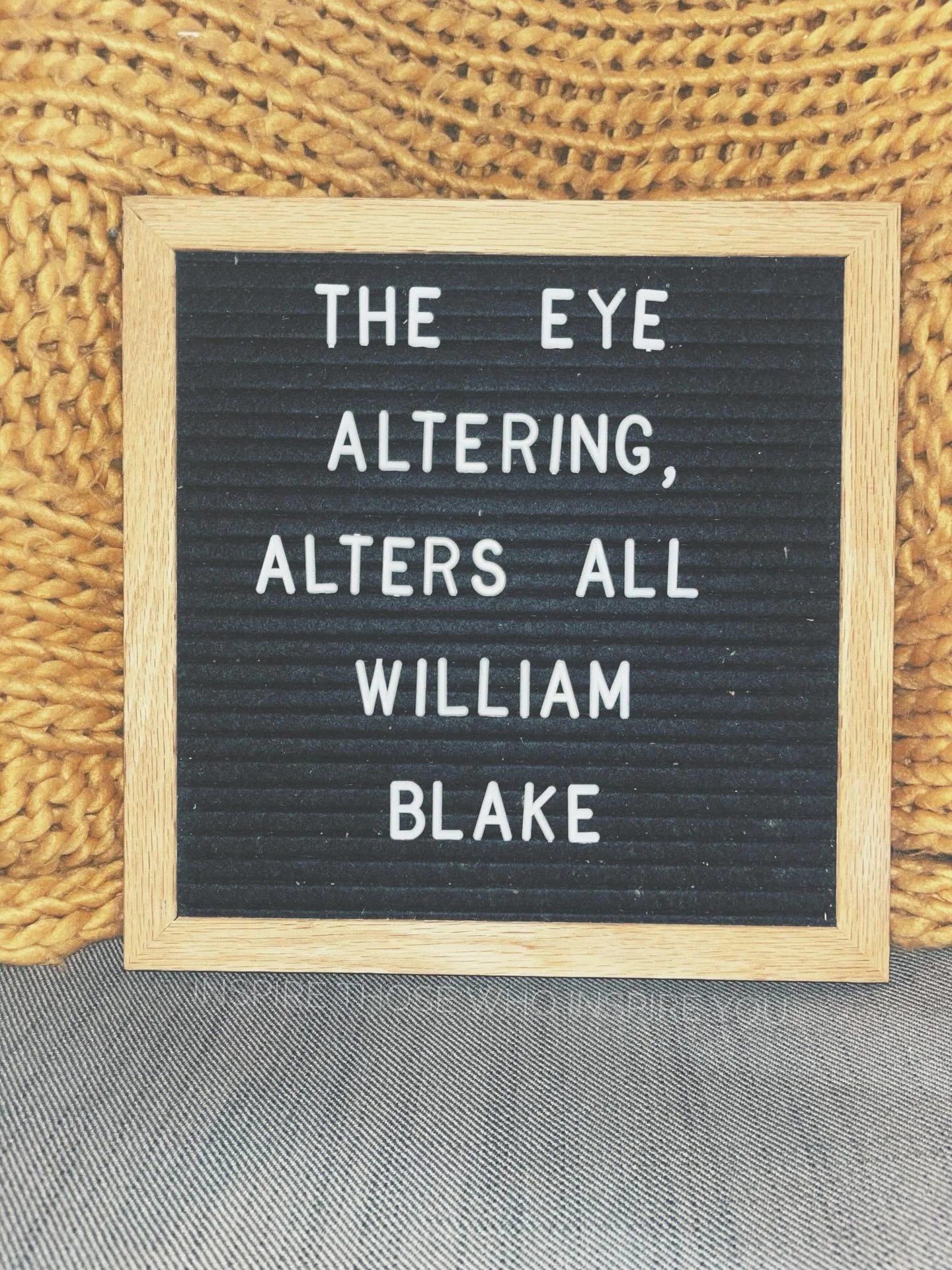
Editor’s note: The responses shared throughout this piece exactly as they were submitted, without corrections or alterations. Participants identities have been kept anonymous, including my own responses. Some answers have been selected for discussion, but none have been changed to support a particular interpretation.
Welcome back, curious minds and kind hearts, to the final chapter.
I’ve been asking a lot of questions lately. Which, if you’ve been reading For What It’s Worth, probably isn’t surprising.
In Fill in the Blank, I wondered what happens when we don’t have all the information, and how easily we can fill the missing spaces ourselves. Then, in Long Story Short, I thought about the stories we hear from other people and how much can get condensed, interpreted, or simply left out along the way.
Within Same Difference, I took that curiosity a little further. how can two people who the same person and walk away with completely different impressions? And in All Things Considered, I wondered how much we can really know, even after we’ve asked questions and considered what’s available to us.
So after spending four chapters telling you what I’ve been thinking, I figured it was only fair to turn things around. I wanted to know what you thought. Rather than me doing most of the talking (typing, in this instance, so to speak), I asked some questions and handed them over to you.
To be specific, there were no right answers I was looking for. No hidden lessons in the questions. I was mostly curious about where different minds might go when give the same information.
What would you notice? What would you assume? What would you want to know before deciding what you thought? And, maybe most interestingly, would any of us end up in the same place?
With that, we’ll leave it up to those of you who participated.
You Tell Me.
I started by sending hypothetical situations to a few people individually, one question at a time. Later, I created an anonymous survey with questions about everyday situations, relationships, work, and the ways we respond to other people.
It wasn’t a scientific study. It was a small group. While not everyone responded to every question, I also answered the survey before seeing anyone else’s responses. I simply wanted to see how differently, or similarly, we might respond to the same situations.
What I didn’t anticipate was how often an answer would leave me wanting to ask another question.
One question I asked was:
You say something in a group conversation and nobody responds. What story, if any, does y our brain immediately tell you?
Think about that for a moment.
You say something. Nobody acknowledges it.
What’s the first explanation that comes to mind?
Here are the four responses that were received:
“That no one heard me.”
“Ok that did not go over well.”
“That it was a stupid comment.”
“They aren’t listening.”
Four people. The same information. Four different explanations. And yet, we don’t actually know why nobody responded.
Maybe the group was distracted. Maybe the comment wasn’t heard. Maybe someone was thinking about what to say. Or maybe the silence really did have something to do with that comment.
We could come up with several possibililities, but without more information, we’d still be guessing.
What interested me was how differently people filled that silence. I, myself, have always been fairly quiet and reserved. So when I do speak up in a group, i’m sometimes not heard or I’m misheard. It happens often enough t I’ve come to expect it. Sometimes I’ll repeat myself, but if I’m not comfortable, I might just let it go.
At the same time, I’ve also been the person who didn’t respond because I lost focus or genuinely didn’t hear what someone said.
So I was surprised to see that someone’s immediate thought might be that they’d made a stupid comment. That possibility hadn’t been the first thing to cross my mind.
Instead, it made me wonder how differently we might experience not only silence, but any situation where we’re left to interpret someone else’s response.
I’m curious, what about you? When nobody responds, where does your mind go first?
Of course, different perspectives aren’t always as obvious as four different explanations. Sometimes, the answers look remarkably similar.
I asked:
“Someone does you a big favor without being asked. Do you feel grateful, indebted, suspicious, uncomfortable, or something else?”
The responses were:
“Depends on what it is. But I’d be appreciative with whatever it is.”
“Grateful possibly indebted depending on what it was I may do the same for her the next time.”
“Grateful and indebted.”
“Grateful. If they do me a favor without asking, I’d return the favor too.”
Everyone expressed gratitude or appreciation, but some also mentioned feeling indebted or wanting to return the favor. So I wondered whether those feelings necessarily mean the same thing to everyone.
I remember a customer I spoke with regularly surprising me with a gift card one year. I was over the moon, but I also felt guilty because I couldn’t return the gesture. Still, to this day, I don’t know what inspired their generosity, through I’ve wondered whether a conversation we’d had about television and football played a role. Either way, that gift stayed with me.
Now, around the holidays, I try to pay it forward whenever I can. I haven’t been able to give someone the same amount they gave me, but what I’m able to.
I don’t believe that customer expected anything from me. I simple wanted to show the same consideration or kindness that I’d been shown.
This experiment made me wonder whether feeling indebted always means believing we owe someone something. Sometimes, maybe it’s wanting to pass on kindness that we haven’t forgotten.
So, have you ever received a favor that stayed with you long after the moment passed?
Thinking about how our experiences shape our reactions led me to another question, one where people might feel just as certain as one another, even when they disagree.
You’re completely certain you remember a conversation correctly. Someone else who was there remembers it differently and is equally certain. How confident are you?
The responses:
“50/50.”
“Most of the time very confident depends on conversation/subject.”
“Usually pretty confident.”
“I’d be confident.”
Here, I was interested in how confident some people expected to feel.
I’ve been in situations where I distinctly remember telling someone something, only for them to insist I never did. I’ve also had people recall things I supposedly said or did don’t feel like something I’d say and it can be especially frustrating.
My first instinct is often to defend what I recall, but I also ask questions. What was happening at the time? What was the conversation about? Why would I have said that?
Sometimes the other person can’t remember those details, which leaves me wondering whether they’re recalling something I actually said or something they believe I said.
But then I have to consider that struggling to remember the circumstances doesn’t make their recollection wrong. And being able to explain mine doesn’t automatically make me right.
If two people are equally certain, how do we decide what to believe?
Maybe there’s evidence that can help. Maybe there isn’t. And maybe the most useful thing we can do is keep asking questions instead of treating confidence as proof.
It’s one thing to remember a conversation differently, but what about responding differently when someone makes a choice we disagree with?
I asked:
A friend asks for your advice, doesn’t take it, and later complains about the exact outcome you warned them about. What’s your reaction?
The answers included:
“It wouldn’t bother me. I’d let them vent their frustrations.”
“Quiet.”
“Made your bed, lie in it. Not going to feel sorry.”
“Indifferent. I have them help it’s up to them if they want to follow your advice or not.”
These responses made me curious about what might be happening beneath the surface.
Does someone feel frustrated because they’ve experienced this repeatedly? Does someone believe asking for advice creates an expectation to follow it? Could staying quiet mean listening patiently, or holding back irritation? And what if the friend wasn’t looking for another solution at all?
Sometimes talking about something is how people process what they’re experiencing, even when they’ve talked about it before.
I’ve listened to people vent about situations that weren't changing. Sometimes I’ve felt frustrated about it later, on my own, but that doesn’t mean I regret listening.
I think it’s important to have people we can talk to.
Part of that comes from my own experiences. I’ve often needed someone to truly listen, only to feel as though they were already thinking about what to say next or what else they needed to do. Sometimes I wanted advice. Other times, I wanted someone to ask questions, show genuine interest, or simply acknowledge it wasn’t okay.
I know how hurtful it can be when that support doesn’t seem to be there, especially when you try to offer it to others.
At the same time, it doesn’t mean I agree with every decision someone makes or every interpretation they have. I can support someone’s feeling while seeing the situation differently. And I recognize that listening can be difficult, especially when someone is dealing with their own responsibilities or limitations.
Still, I wonder how often we confuse supporting someone with agreeing with them.
What do you think? Can we disagree with someone’s choices and still make room for what they’re feeling?
That distinction between what someone feels and how someone interprets a situation became even more interesting in the final question I wanted to share.
Someone says something that genuinely hurts you. When you tell them, they say, “I didn’t mean it that way.” How much does their intention change how you feel about what happened?
Here’s what people said:
“If they explain it further, such as their thought process and what they did mean, it could change how I feel.”
“If they explain it, I understand if they truly seem genuine.”
“I don’t believe them.”
“Not sure. If they apologize for it, I’d let it go. But if they just say they don’t mean it that way, I’d keep my guard up.”
Some wanted an explanation. One emphasized sincerity. Another wanted an apology. One didn’t believe the explanation.
I found myself wondering what experiences might have shaped those reactions.
When I was much younger, I made a joke that someone found hurtful. I explained that I was joking, but I didn’t really follow up beyond that. At the time, I didn’t fully understand the important of acknowledging, even if hurting them hadn’t been my intention. Looking back, I would handle that situation differently.
Now, when someone tells me I’ve hurt them, I try to understand why. I might ask questions, explain what I meant, and apologize.
I’ve also experienced trying to explain my intentions and feeling as though the other person had already decided what kind of person I was before hearing me out.
Those experiences have made me think about how both people might be carrying something into the conversation that the other doesn’t know.
Someone can be genuinely hurt by what was said, even if the hurt wasn’t intended. And someone can genuinely mean something different from how their words were understood.
Which leads me to this question, what would happen if we made room for both possibilities?
An explanation doesn’t automatically erase the hurt. But the hurt doesn’t necessarily tell us everything about the intention, either.
Sometimes understanding might change how we feel. Sometimes it might not. And sometimes we may need more than a brief explanation to understand one another.
Which leaves us with this:
When I started asking these questions, I wanted to learn how other people think. What they notice. What they wonder. How they arrive at their conclusions.
And I noticed that my own perspective was often different from the responses I received. Not better. Not worse. Just different.
Sometimes I thought about circumstances that weren’t mentioned in an answer. Other times, exploring someone else’s response introduced possibilities I hadn’t considered myself. I also had to remind myself that just because someone didn’t mention something doesn’t mean they never considered it.
I had their answers. I didn’t have ever thought or experience behind them. Even if, I wanted more.
I wanted to know what made someone so certain. What experiences might have shaped a strong reaction. What someone would say if they had more room to explain themselves.
I wish I could’ve had longer conversations with everyone.
People may struggle to explain themselves, answer differently depending on the wording, or not fully understand why they react a certain way. And sometimes a brief answer simply doesn’t leave room for everything they’ve considered.
So perhaps the deeper reflection isn’t that asking questions always gives us the truth. It’s that asking questions gives us an opportunity to discover something our own perspective couldn’t show us.
And maybe that’s what I’ve been trying to understand throughout For What It’s Worth.
We can share an experience and remember it differently. Hear the same words and take away different meanings. Encounter the same situation and imagine entirely different explanations. Our perspectives are shaped by what we’ve lived, what we’ve learned, and what we think we know. And while those perspectives can help us make sense of the world, they don’t always tell us the whole story.
I started this series with questions, and it seems only fitting to end it with a few more.
So, I challenge you, the next time someone’s reaction surprises you, what might you be missing? What would you want to know? And what might happen if you asked?
You tell me.
As a signature of my blog, I’d like to end this post with a suggestion to “Pass on kindness.” There’s no time like the present to Inspire Those Who Inspire You. Acts of kindness, no matter how big or small, can have a direct, positive impact on someone else. Go out there today and change someone’s life for the better!
***These are my personal opinions and may not be those of my employer.***