This Might Change

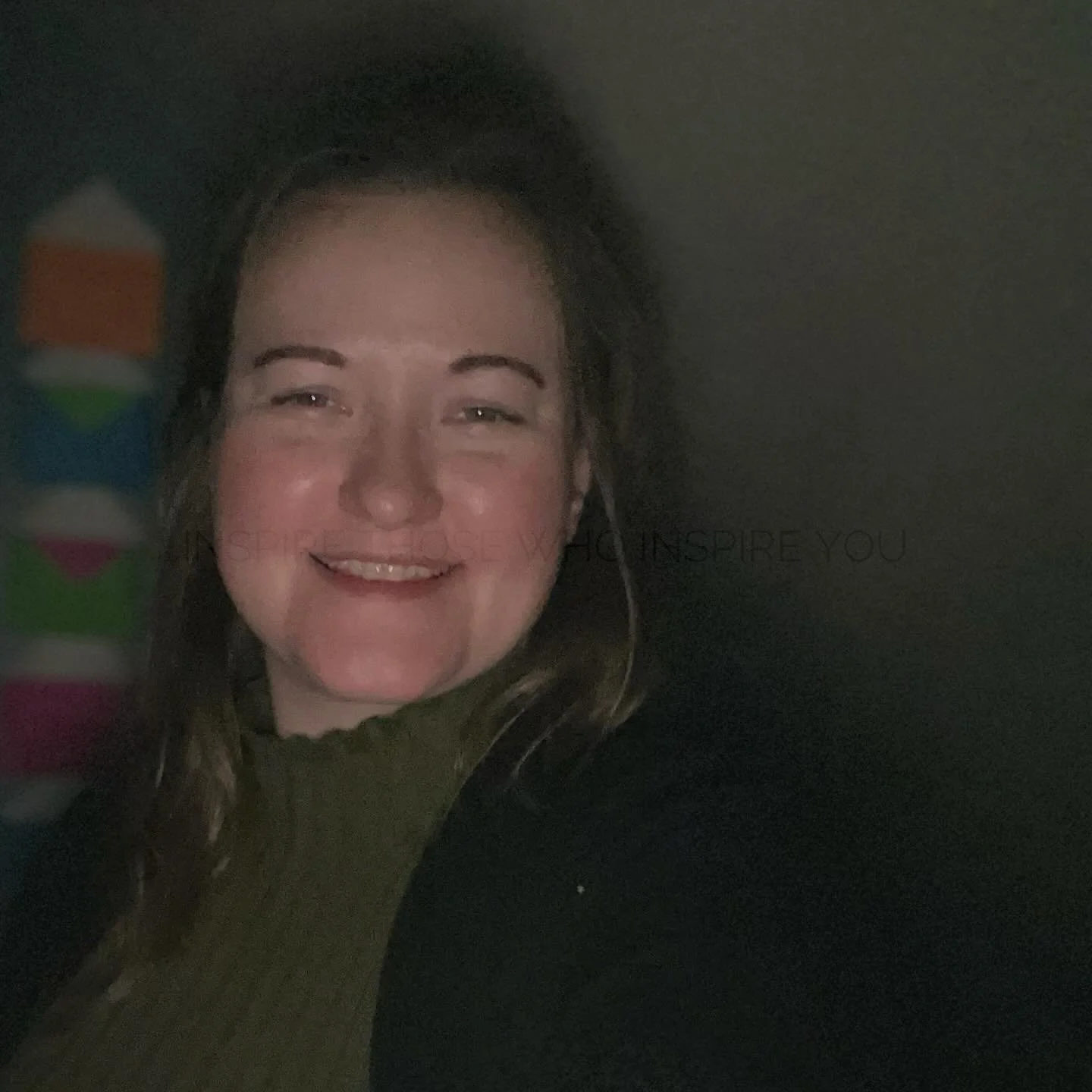
Me standing beneath an art frame, making peace signs, and reflecting a sense of confidence, healing, and inner peace.
Editor’s note: Written from my current vantage point.
Welcome back, fellow truth-seekers and deep thinkers, today is the last and final layer of the Head & Heartwork series. We’re almost there! If you are just joining us today, the Head & Heartwork series is about aligning logic and emotion, doing the internal work that helps us live with more honesty, self-awareness, and intention. It explores what happens when we stop performing growth and start practicing it.
Let’s take a quick moment to reflect on the previous posts and lessons they’ve shared with us:
“Real Over Right” focuses on choosing authenticity over ago by prioritizing truth and connection instead of needing to win or be correct.
“All the Feels” challenges constant positivity and encourages embracing emotional range as a sign of strength, not instability.
“Low-Key Grateful” redefine gratitude as a quiet, grounding practice rather than a performance. Appreciation that steadies rather than silences.
“Beneath the Surface” explores the emotions we tend to avoid and what they can teach us when we’re willing to face them.
Each of these reflections has built on the last, choosing honesty over ego, embracing emotional range, grounding ourselves in quiet gratitude, and facing what lives beneath the surface. And as much as growth asks us to look inward, it also asks us to evolve in real time.
That brings us to today’s post. Another layer of the work, another moment of the progress.
In Beneath the Surface, I referenced an experience that changed me in ways I’m still understanding. I didn’t have the language for it then and I’m not sure I fully do now. But I’m ready to begin naming it.
There was a season in my life that felt especially cruel. I had no real support. I was dealing with a health scare. I was carrying more responsibility than I ever had before in my life.
It wasn’t that I was consciously avoiding my emotions. I just didn’t have the capacity to process them, at that time. I didn’t have the energy to sit, release, or untangle what I was feeling. Survival took priority.
So, I kept moving. Not because I was healed. Not because I wasn’t hurting. But because people depended on me, and stopping didn’t feel like an option.
There was more happening during that season than I allowed myself to admit. I won’t share every detail, but I will say this: I was in a situation that slowly eroded my sense of safety and self.
It was abuse.
So, survival became my normal.
Not in a dramatic way. But in quiet, every day ways. In the constant awareness of my tone, my timing, my presence. In the way I monitored myself before speaking. In the way I braced for reactions I couldn’t predict.
During that time, I stopped feeling like the person I knew.
I became smaller. More cautious. More reserved. Not because that’s who I was, but because it felt safer that way.
There’s a particular exhaustion that comes from never fully relaxing. From never knowing when the next moment of tension will come. Even when nothing was happening, my body held onto the possibility that something could.
Over time, it began to affect everything.
My confidence. My focus. My sense of stability. Things that once came naturally, such as speaking freely, trusting my instincts, feeling as ease, all became harder. I questioned myself and others more. I hesitated more. I carried a weight I didn’t have the language to explain.
And the hardest part was how invisible it all was.
From the outside, I was still functioning. Still showing up. Still doing what was expected of me. I still carried the same heart and same faith, and somewhere deep down, a small hope remained. But I wasn’t as open anymore. I was more guarded. More careful. And more aware.
Survival doesn’t always look like escape. Sometimes it looks like endurance.
I knew something was wrong. I knew it wasn’t healthy. And I did speak up, more than once. But no matter how many times I shared pieces of it, nothing changed. No one intervened. No one stepped in the way I hoped they would.
My family encouraged me to leave, but they didn’t fully understand. While they saw pieces of the devastation, they didn’t see the full reality of what I was living through. And how could they? They weren’t there the nights I cried myself to sleep. They weren’t there when my body shook from the weight of it all. They didn’t see what it did to me to be yelled at over and over, without space to breathe. They didn’t see how deeply the criticism, the dismissal, and the constant tearing down affected me. They didn’t see how there was no room for me to gather myself, no space to receive before it began again.
No one saw how much time, energy, and care I poured into trying to hold everything together. No one heard the quiet conversations I had with myself each morning, convincing myself to get up, to show up, to keep going, even when every part of me wanted to retreat and rest.
After all, it happened behind closed doors. Words spoken near me, but rarely directly at me. Decisions and conclusions formed without every hearing my side of the story.
And that’s what made it so disorienting. From the outside looking in, life continued as normal. Expectations remained. Conversations carried on. But internally, I was unraveling in ways I didn’t know how to explain. In ways I had already tried to express, only to be met without the care or compassion I needed.
It wasn’t that I hid what was happening. I named it. I reported it. And when nothing came of it, I did what I could to protect myself. I created distance where I could. I avoided certain individuals, not out of avoidance, but out of necessity and perseverance. Because I knew how quickly things could escalate, how easily it could spiral into something even more damaging.
So, I learned to survive inside it.
Over time, it changed me.
Not all at once. Not in ways anyone could immediately point to. But slowly and quietly it eroded me. I became someone who is more guarded. More careful. Someone who no longer moved through the world with the same openness I once had.
I began questioning myself and others more. It became an internal battle between what I knew I had experienced, trying to make sense of it, and trying to rationalize why others would treat me that way. I searched for explanations that would make it hurt less. That would make it make sense.
I often found myself wondering what was wrong with me. Why no one seemed to believe me. Why it felt like I was being judged so quickly, while others weren’t held to the same scrutiny. Why my voice carried less weight than the assumptions made about me.
That kind of questioning changes you. It makes you turn inward. It makes you examine parts of yourself that were never the problem to begin with.
It took time to understand that the confusion I carried wasn’t a reflection of my truth, it was a result of being placed in a situation that distorted it.
It took time to understand that it wasn’t just about what was said or done. It was about how differently everything was handled depending on who it involved.
I noticed the inconsistencies. The way certain behaviors were called out almost immediately when it was me, but overlooked, softened, or excused when it was someone else. It wasn’t about perfection, it was about fairness.
Integrity is supposed to be consistent. Accountability is supposed to apply to everyone. But that wasn’t my experience.
When it was me, every mistake was magnified. Every flaw was remembered. But when it was others, there always seemed to be context. Understanding. Space to move on.
I wasn’t asking for anyone to be punished. I wasn’t asking for anyone to be seen as the villain. I was asking for the same honesty and accountability across the board. For the same standard.
Because fairness shouldn’t depend on who you are.
I remember being late a few times, three or four at most. Not out of carelessness, but because life doesn’t always move predictably. Unexpected situations arise. Circumstances that were out of my control. And when it happened new rules were enforced. Rules that directly impacted me.
So I adjusted. I did what I was asked. I tried to stay ahead of it.
But I also watched others arrive late more often, without the same consequences. Without the same urgency to correct it. And it made me question whether the issue was ever really about being late.
There were conversations happening around me. Criticism, mockery, judgment directed at others. I didn’t participate in it. When someone crossed a line, I spoke up. Not out of defiance, but out of principle. And instead of being supported, I was told to step back. To separate myself.
There were days when I needed a moment to breathe. To steady myself. But I was expected to keep going. To continue as if nothing was wrong, even when everything inside me felt heavy.
And there were times I tried to do more. To stay late, to remain caught up, to show that I cared. But the flexibility I saw extended to others didn’t always extend to me.
Individually, these moments might not seem significant. But together, they formed a pattern. A pattern that slowly changed how I saw myself. How I moved. How safe I felt simply existing in that space.
It wasn’t just the abuse that hurt.
It was realizing that fairness wasn’t guaranteed.
The cost of that experience wasn’t immediate. It showed up later, in the ways I saw myself, the way I trusted others, and the ways I moved through the world.
I had always believed that people were capable of doing the right thing. That honesty mattered. That integrity mattered. That if you showed up with care and intention, it would mean something.
I believed we were all capable of making a difference in each other’s lives, even in small ways.
And losing that belief, even partially, was one of the hardest things to come to terms with.
It changed how I saw people. It changed how safe I felt being fully myself. It changed how freely I gave my trust, my energy, my care.
I became more guarded. Not because I wanted to be, but because I had learned what could happen when you weren’t.
There was a grief in that. Grief for the version of myself who moved through the world with openness. Who believed that doing the right thing would be enough. Who didn’t fully understand how deeply people could disappoint you when given the chance.
I didn’t lose my heart. But I did lose a certain innocence. A certain ease. A certain belief that fairness and kindness were guaranteed.
And that was a price I never expected to pay.
But this isn’t where my story ends. Because surviving that experience didn’t just show me what I lost. It showed me what I was capable of enduring.
And while it changed me, it didn’t erase me.
For a long time, I thought survival meant losing parts of myself permanently. The openness. The trust. The belief that I could exist in spaces without having to protect myself so carefully.
But over time, I began to realize something else.
What I lost wasn’t my heart. It was my certainty. And certainty can be rebuilt.
I began to find my voice again. Not all at once, but in small, intentional ways. In choosing honesty, even when it would’ve been easier to stay quiet. In trusting my instincts, even after they had been questioned for so long. In reminding myself that what I experienced was real, and that my response to it was human.
I stopped blaming myself for what I endured.
I stopped carrying responsibility for things that were never mine to carry.
And slowly, I began to return to myself.
Not the same version of me that existed before, because she didn’t know what I know now, but a stronger, more aware version. Someone who understands the importance of boundaries. Someone who recognizes her own resilience. Someone who longer ignores discomfort to preserve peace.
I didn’t become harder. I became clearer.
Clearer about what I deserve. Clearer about what I will and will not accept. Clearer about the kind of environments I allow myself to exist in.
What happened to me didn’t break me. But it did change me.
And in many ways, it taught me how to protect the parts of myself that matter most.
Sharing this isn’t about reopening wounds. It’s about honoring the truth of what I survived, and the strength it took to become who I am now.
For a long time, I questioned whether sharing this would matter. Whether it would change anything. Whether it was easier to leave it in the past and move forward quietly.
But silence protects comfort, not truth.
Sharing this isn’t about reopening wounds. It’s about honoring what I’ve lived through, and acknowledging the strength it took to survive it. It’s about reclaiming the parts of myself that were never meant to be diminished. And it’s about choosing honesty, even when it would be easier to say nothing at all.
This is where I am right now. There are the words I have today. These are the feelings I can name today.
But this might change.
Time has a way of softening things. Of bringing clarity where there was once confusion. Of helping us carry what once felt unbearable. What I feel today may not be what I feel a year from now. And that, too, is a part of healing.
Healing isn’t fixed. Reflection isn’t final. Growth isn’t linear.
So let me ask you this, where in your life have you been minimizing what you’ve experienced just to keep the peace? Where have you convinced yourself that something was “not that bad,” when deep down, you know it changed you?
Be honest with yourself.
Not to reopen pain, but to acknowledge your reality. To honor your experience. To give yourself the validation you may have not received when you needed it most.
Because the moment you stop denying your truth is the moment you begin returning to yourself.
Sending you love and light.
As a signature of my blog, I’d like to end this post with a suggestion to “Pass on kindness.” There’s no time like the present to Inspire Those Who Inspire You. Acts of kindness, no matter how big or small, can have a direct, positive impact on someone else. Go out there today and change someone’s life for the better!
***These are my personal opinions and may not be those of my employer.***